
Earnings growth in the early-bird sample has been driven by banks and iron & steel companies.

While the stocks met various other inclusion parameters, there were fears they may still get disqualified given the sharp run up in their stock prices.

However, experts caution that investors should not expect the big returns they got from the sector between March and September 2020.

Together with its share buyback worth Rs 16,000 crore completed in January this year, TCS shareholders will receive a record Rs 30,250 crore from their company in FY21.

The listing day gain-to-loss ratio for FY21 was 71 per cent, the highest since FY17, when it was 85 per cent.

The earnings are, however, expected to be down around 2 per cent on a sequential basis due to pent-up demand getting exhausted and the adverse impact of rising metals and energy prices on consumer goods and manufacturing companies.

The finance ministry said the sharp inflows last fiscal were due to the government's policy initiatives and economic recovery.

'It won't help being complacent about the momentum and valuations of equities that currently exist.'

India Inc's cash pile was up 13.8 per cent last fiscal year, thanks to a combination of higher profits in sectors such as IT and fund raising by top companies such a Reliance Industries, Bharti Airtel and Tata Motors, among others.

Jhunjhunwala, one of India's well-known individual investors, was speaking at the India Economic Conclave organised by the Times Network. He said he won't rule out 5-10 times gains in state-owned banks over the next five years. Shares of PSBs have been on a tear this year. The Nifty PSB index is up 20 per cent so far this year.

Sebi proposes to relax ownership rules to allow more entrants in the exchange space, which is seeing a disruption globally with the emergence of new technologies such as block chain.

The rise in US bond yields spooked investors last week and there could a further increase given the inflation dynamics, according to Christopher Wood, global head of equity strategy at Jefferies. "The US bond market sell-off has continued over the past week, and with it the increased potential for an inflation scare. "Still, there is plenty of scope for bonds to sell off more since the last time the 5-year forward inflation expectation rate was running at current levels (namely in early December 2018), the 10- and 30-year bond yields were significantly higher at 2.91 per cent and 3.17 per cent, respectively," the market guru said in his newsletter GREED & fear. The 10-year and 30-year US Treasury finished at 1.34 per cent and 2.13 per cent, respectively, last week.

Tata group companies have outperformed the broader market over the past four years, under the chairmanship of N Chandrasekaran. However, the group's fortunes rely heavily on the performance of Tata Consultancy Services (TCS) now, as compared to the past. The combined market capitalisation of the group's listed companies has nearly doubled in the last four years, against a 77 per cent rally in the benchmark Sensex during the period. The overall market value of 16 key group firms - excluding listed subsidiaries of such entities - stood at Rs 16.8 trillion as of Friday. This was close to 2x the Rs 8.45 trillion as of February 21, 2017 - the day Chandrasekaran took charge as chairman of Tata Sons.

The exchange cited issues with its telecom service providers that prevented stocks and index quotations from getting updated.

India Inc's quarterly net profit reached a record high of Rs 1.64 trillion in the third quarter ended December 31, 2020, mainly due to gains from higher commodity prices and a big swing in banks' earnings. The combined net profit of 3,323 listed companies that have declared results so far was up 68.6 per cent year-on-year (YoY). In comparison, earnings were up six times (534 per cent) in the second quarter and 6.5 per cent in the corresponding period last year.

The bulk of the incremental profits will come from oil & gas and automobile sectors.
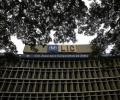
Sebi's change of rules will give the government -- which owns 100 per cent of LIC -- the flexibility to assess market demand and opt for lower dilution.

The combined net sales of 42 listed construction and capital goods companies that have declared their third-quarter results so far were down 2.3 per cent year-on-year in Q3FY21 while core operating profit was up just 4.9 per cent YoY during the quarter.

Market cap of government companies has remained unchanged in the past 8 years.

Through anchor allotment, a firm can demonstrate the demand for shares by getting marquee investors on board.
